Executive Committee
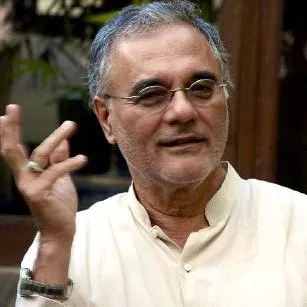
Mahmood Mamdani is the Herbert Lehman Professor of Government. He was also professor and executive director of Makerere Institute of Social Research (2010-2022) in Kampala, where he established an inter-disciplinary doctoral program in Social Studies. He received his PhD from Harvard University in 1974 and specializes in the study of colonialism, anti-colonialism and decolonisation. His works explore the intersection between politics and culture, a comparative study of colonialism since 1452, the history of civil war and genocide in Africa, the Cold War and the War on Terror, the history and theory of human rights, and the politics of knowledge production. Prior to joining the Columbia faculty, Mamdani was a professor at the University of Dar-es-Salaam in Tanzania (1973–1979), Makerere University in Uganda (1980–1993), and the University of Cape Town (1996–1999).
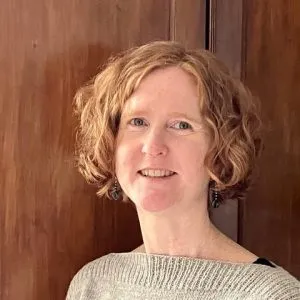
Rhiannon Stephens specializes in the history of precolonial and early colonial East Africa from the first millennium CE through the twentieth century. She is the author of Poverty and Wealth in East Africa: A Conceptual History (Duke University Press, 2022), an interdisciplinary history of how people living in eastern Uganda have sustained and changed their ways of thinking about wealth and poverty over the past two thousand years. Her first monograph, A History of African Motherhood: The Case of Uganda, 700-1900 (Cambridge University Press, 2013), traced the history of motherhood as a social institution and an ideology across over a millennium of Ugandan political, economic and social change. She is the co-editor of Doing Conceptual History in Africa (Berghahn Books, 2018), which critically examines what it means to write conceptual history on the continent. Her current research is a collaborative project that focuses on questions of gender, power, and climate over fifteen-hundred years on the east coast of Africa. Her work has been published in the American Historical Review, the Journal of African History, Past and Present, and African Studies Review.
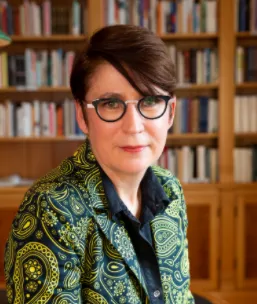
Rosalind Morris’ work is addressed to the histories and social lives—including the deaths and afterlives—produced in the interstices of industrial and resource-based capitalism in the Global South. Those interests extend to the technological and media forms that attend or undergird these economies, and the forms of subjectivity produced in their midst. They also encompass the racialized and sexualized political logics and structures of desire accompanying these phenomena. Morris’ recent writings on these subjects are grounded in deep ethnographic research in Southern Africa, an engagement that now stretches over more than two and a half decades; her early work was centered on mainland Southeast Asia, especially Thailand.
Believing that ethnography is a mode of extended listening and learning from others, and that textual practice is a dimension of analytic practice, Morris's work encompasses a variety of forms and media, from scholarly articles to essayistic prose, and ethnographic monographs. Her media works included documentary film and expanded cinematic installation, as well as narrative film. Among her recent works are the documentary film, We are Zama Zama, which premiered as an official selection of the ENCOUNTERS International Documentary Film Festival in 2021, and the flexible multi-media installation, 'The Zama Zama Project,' which was an official selection of the Berlinale Forum Expanded in 2021. Morris's poetry has appeared in venues such as Ideas and Futures, Literary Imagination and the Capilano Review, among other publications. Artistic collaborations have been central to Morris's creative practice. In addition to her monograph on Clive van den Berg and her co-authored volumes with William Kentridge, her libretti, co-written with Yvette Christiansë, have been the bases of two operas by the Syrian-born composer, Zaid Jabri.
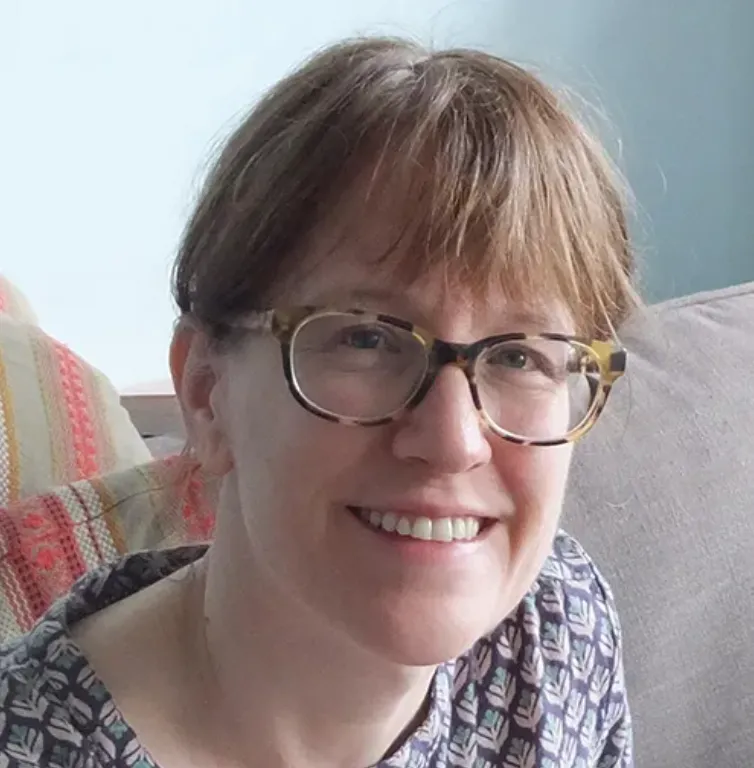
Zoë Crossland’s research deals with the historical archaeology of Madagascar, and with evidential practices around human remains. Her approach to historical inquiry is informed by Peircean "semeiotics," which she uses to explore the imbrication of the material and the immaterial, the human and the nonhuman.
The research Crossland has undertaken in Madagascar has been concerned with archaeologies of encounter, including a consideration of how material traces in the landscape made the dead present as historical actors (2014). She is now working with colleagues Chantal Radilmilahay, Bako Rasoarifetra and Rafolo Andrianaivoarivony on the history of irrigated riziculture in the highlands, with a particular focus on the constitution of sovereignty through and with the partnership of rice plants, paddy fields and irrigation structures.
In her work on forensic evidence and the archaeological production of the dead body, Crossland considers the work of inference and practical activity by which archaeology conjures and evaluates competing claims about the past. She is presently working on a book, The Speaking Corpse, which teases out the different evidential relations through which the forensic corpse presents itself as witness. She does this by attending to the ways in which the evidence of the dead is explained and delineated for popular consumption by forensic anthropologists.