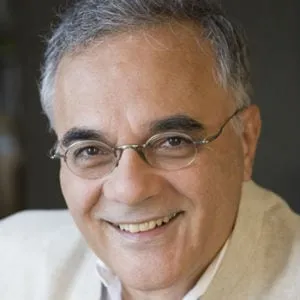
Director
Mahmood Mamdani is Director of the Institute of African Studies and the Herbert Lehman Professor of Government. He was also professor and executive director of the Makerere Institute of Social Research in Kampala from 2010 to 2022, where he established an interdisciplinary doctoral program in Social Studies. He received his PhD from Harvard University in 1974 and specializes in the study of colonialism, anti-colonialism, and decolonization. His works explore the intersection between politics and culture, a comparative study of colonialism since 1452, the history of civil war and genocide in Africa, the Cold War and the War on Terror, the history and theory of human rights, and the politics of knowledge production. Prior to joining the Columbia faculty, Mamdani was a professor at the University of Dar es Salaam in Tanzania from 1973 to 1979, Makerere University in Uganda from 1980 to 1993, and the University of Cape Town from 1996 to 1999.
He has received numerous awards and recognitions, including being listed as one of the “Top 20 Public Intellectuals” by Foreign Policy in the United States and Prospect magazine in the United Kingdom in 2008. In 2021, he was named among “The World’s Top 50 Thinkers” by Prospect magazine.
His latest work, Slow Poison: Idi Amin, Yoweri Museveni, and the Making of the Ugandan State (Harvard University Press, 2025), examines Uganda’s struggle for decolonization and the making of the postcolonial state. His previous book, Neither Settler nor Native: The Making and Unmaking of Permanent Minorities (Harvard University Press, 2020), was shortlisted for the 2021 British Academy Book Prize for Global Cultural Understanding and named a World History finalist for the Association of American Publishers’ Awards for Professional and Scholarly Excellence, known as the PROSE Awards.
From 1998 to 2002, he served as President of CODESRIA, the Council for the Development of Social Science Research in Africa. His essays have appeared in the New Left Review and the London Review of Books, among other journals.
He teaches courses on Major Debates in the Study of Africa; the Modern State and the Colonial Subject; the Cold War and the Third World; the Theory, History, and Practice of Human Rights; and Civil Wars and the State in Africa.
Mamdani’s books include Slow Poison: Idi Amin, Yoweri Museveni, and the Making of the Ugandan State (2025); Neither Settler nor Native: The Making and Unmaking of Permanent Minorities (2020); Saviors and Survivors: Darfur, Politics, and the War on Terror (2009); Good Muslim, Bad Muslim: America, the Cold War, and the Roots of Terror(2004); When Victims Become Killers: Colonialism, Nativism, and the Genocide in Rwanda (2001); Citizen and Subject: Contemporary Africa and the Legacy of Late Colonialism (1996), which was awarded the Herskovits Prize of the African Studies Association; Politics and Class Formation in Uganda (1976); From Citizen to Refugee (1973); and The Myth of Population Control: Family, Class and Caste in an Indian Village (1972).
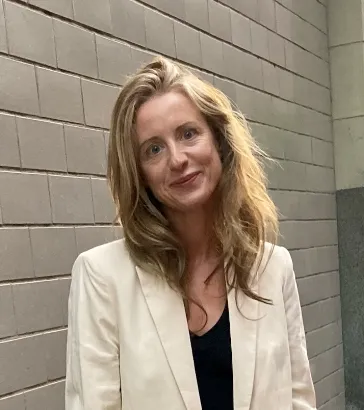
Associate Director
Jinny Prais | [email protected]
As Associate Director of the Institute of African Studies, Jinny Prais manages the Institute's operations, finances, programming, communications, outreach, and development. She develops and maintains partnerships across Columbia, New York City, and international institutions, oversees student and alumni engagement, and manages the Institute's web and social media presence. Her work spans grant development and management, visiting scholar coordination, human resources, and institutional continuity across leadership transitions. She advises the SIPA Africa Specialization and the IAS Graduate Certificate in African Studies.
Prais works at the intersection of teaching, advising, student engagement, and scholarship and program development. She serves as Adjunct Assistant Professor in MESAAS and SIPA, where she teaches African Civilization, Locating Africa in the Twentieth-Century World, and Citizenship and Social Movements in Africa.
Prais co-leads the African Humanities Project, a collaborative initiative developing shared, modular approaches to African humanities teaching across partner institutions in Morocco, Senegal, and France. She has led and managed grant-funded initiatives supported by the Mellon Foundation, the French American Cultural Exchange, the Alliance Program, and multiple internal grants, advancing programming in African humanities, politics, work, and citizenship. She leads Africa House, a student engagement initiative connecting undergraduate and graduate students across Columbia to Africa and African Studies through programming, field trips, film festivals, and cross-institutional collaboration.
Prais holds a PhD in History and Women's Studies from the University of Michigan. Her publications include "'Casting the Badge of Inferiority Beneath Black Peoples' Feet'" (with Mamadou Diouf), Global Intellectual History (2013), and "Representing an African City and Urban Elite," in The Arts of Citizenship in African Cities (2015). She is currently completing a book manuscript, Between Empire and the World: West African Intellectuals in the Early Twentieth Century. She is writing a history of African Studies at Columbia and of African students and their organizations on campus, work that extends the intellectual concerns of the manuscript.
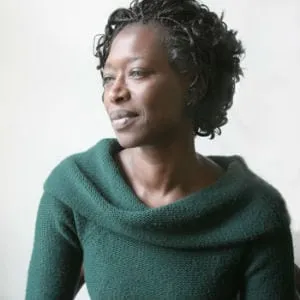
African Language Coordinator
Mariame Sy | [email protected]
Mariame Sy is the Coordinator of the African Language Program and a Lecturer in Wolof and Pulaar in Middle Eastern, South Asian, and African Studies (MESAAS). She came to Columbia University in Fall 2005 from the Department of Linguistics at the University of California Los Angeles (UCLA), where she is finishing a Ph.D. in Linguistics. Her research interests include the morpho-phonology and syntax of West-Atlantic languages such as Wolof and Pulaar, and first and second language acquisition.
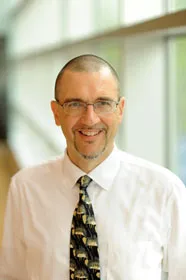
African Studies Librarian
Yuusuf Caruso | [email protected]
Yuusuf S. Caruso is the African Studies Librarian at Columbia (since 1993). He earned his doctorate in History (specialization in East Africa) from Columbia University. He is in charge of everything from and about Africa in the Libraries and offers reference consultations and class instruction. For further information on the collection or to arrange an appointment, please contact Dr. Caruso at the email above.