Ethnographies of African Work Worlds
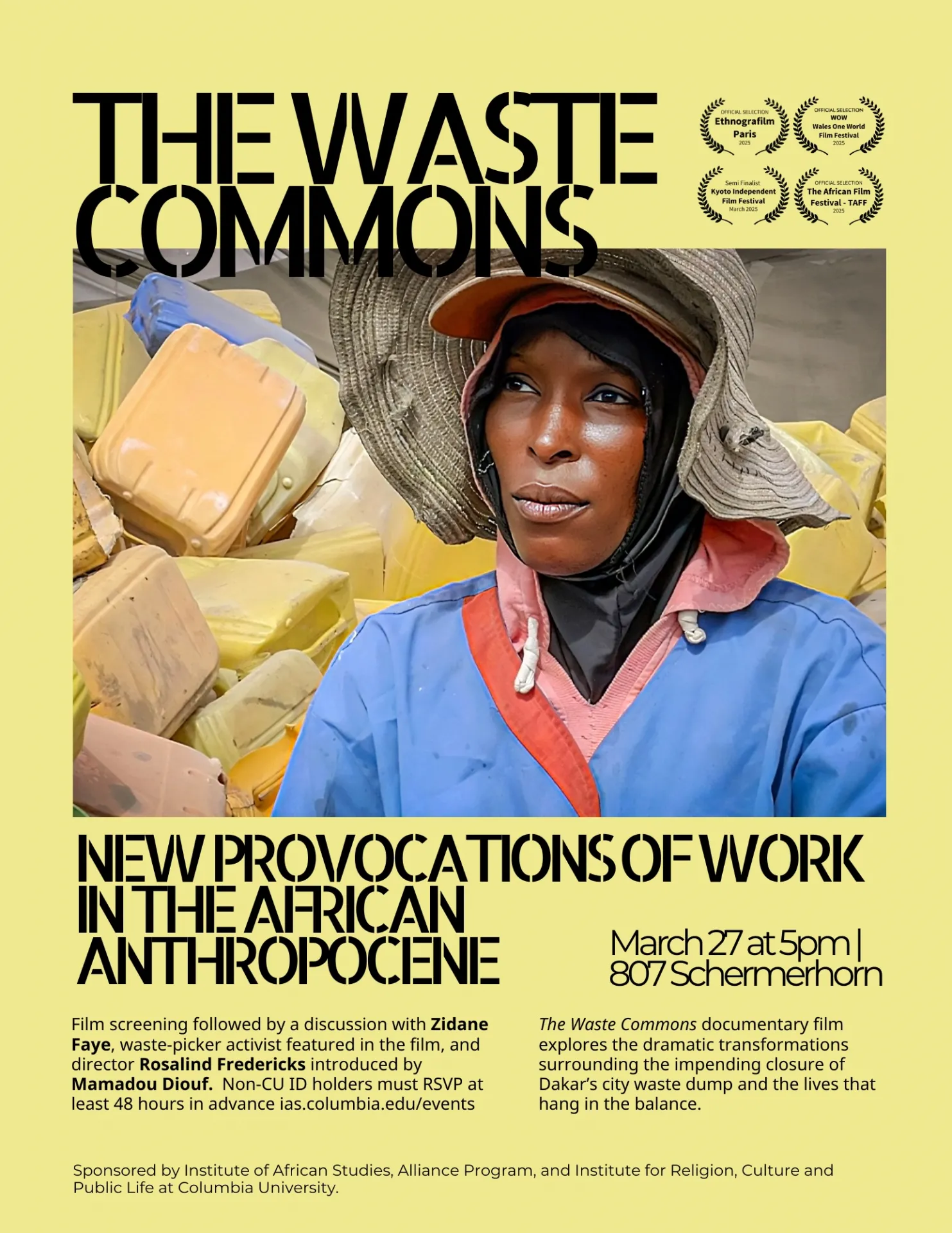
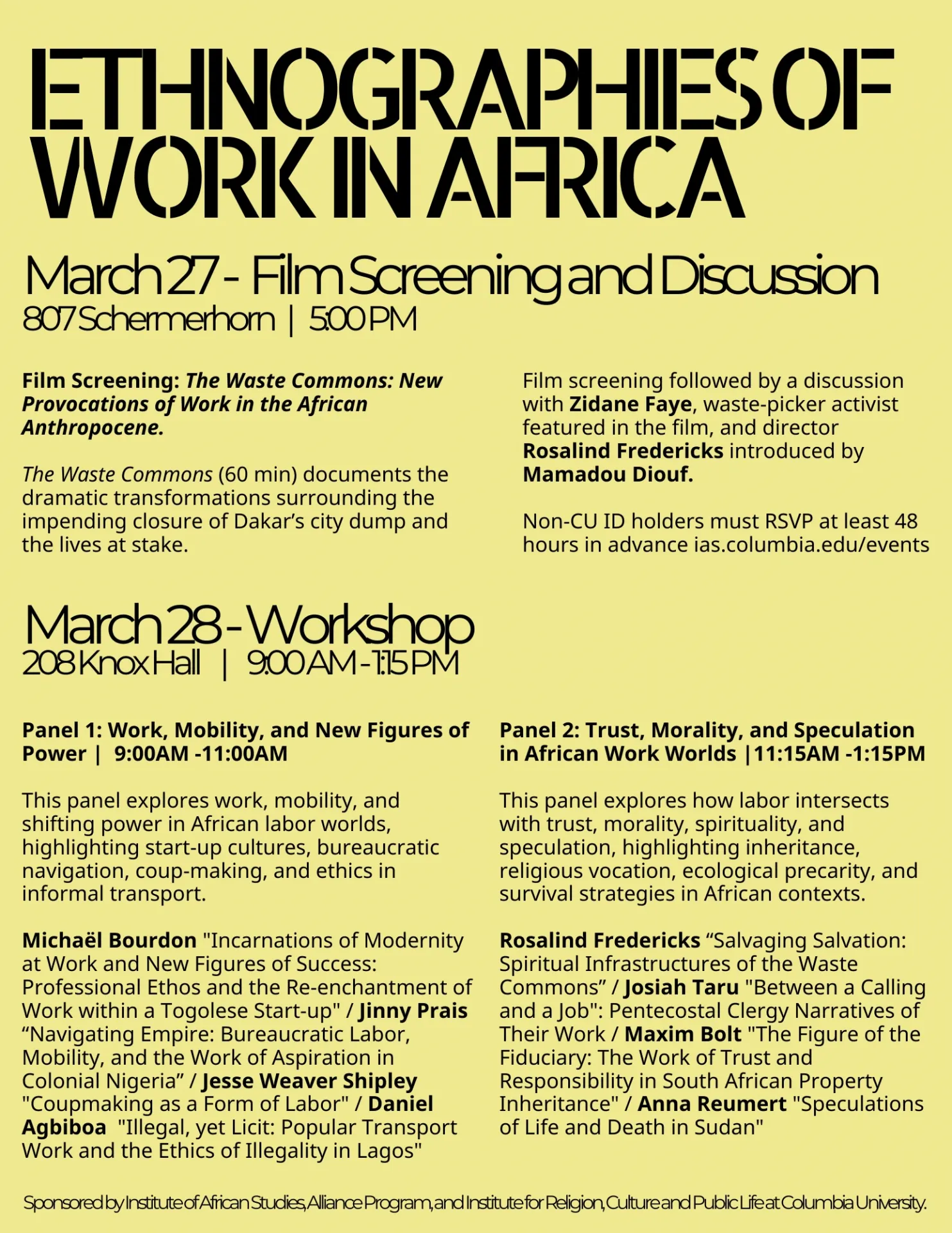
First Workshop: March 27-28, 2024 in New York
Ethnographies of African Work Worlds is a year-long project that brings scholars from the United States, France, and Africa together to examine the changing nature of work and labor in contemporary Africa. Recent years have seen the emergence of a slew of new forms of work – in cultural industries, digital start-ups, privatized transport systems – that are transforming both the nature of work for contemporary Africans and the ways scholars have conceived of and analyzed labor. At the same time, precarious forms of work or what might be designated as not work continue to expand in number. We seek to bring scholars together to: A) understand emerging forms of work that do not quite fit into existing conceptual categories and B) re-examine how scholars, intellectuals and policy makers analytically conceive of work and its operations in contemporary Africa.
Our goal is to expand our conception of work to examine how practices seemingly far removed from “labor” rest upon the world of work. Religious movements, vast in scale, increasingly central to economy, politics and society, represent another such realm. What might it mean to think of theological and institutional innovations as “work”? How can we expand the idea of work from the emphasis on manual and wage-based labor with which it has always been associated and apply it to other realms to analyze cultural, religious, intellectual practices as work? This project takes a capacious view of the concept of work to include unpaid, temporary, or otherwise precarious forms of labor and how this work takes shape within newer digital cultural industries as well as less commonly viewed industries.
The year-long series will include four panels grouped into two workshops: Work Worlds in Africa; Urban Work Worlds; Intellectual, Cultural, Political Work Worlds; and Religious Work Worlds. We begin the series with a discussion of informal and formal work worlds. What are they and what is the tension that exists between them?
Historically, a great deal of effort has been made by various organizations to regulate the informal sectors and therefore bring them into the arena of formal work. We will discuss these efforts as well as look more in-depth into the world of state and bureaucratic work and their peripheries such as forgery. In the second workshop, we turn our attention to a wide range of urban work worlds that are unique to the urban landscape and in many cases are marked by precarity. We will consider work enclaves that have formed within sanitation, health, transportation, leisure and entertainment. Emphasis will be placed on specific work communities to explore their infrastructure, interpersonal relationships, and unique power dynamics. In the third and fourth workshops, we take up less traditionally identified work environments and communities, that is, the work of intellectuals, cultural producers, political activists, and religious leaders as well as churches and mosques. By applying the concept of work to these actors and social and political formations, we hope to take a fresh look at how work in its most basic definition operates within these fields. This should allow for greater transparency around the material aspects of work in areas of intellectual, cultural, political, and religious production.