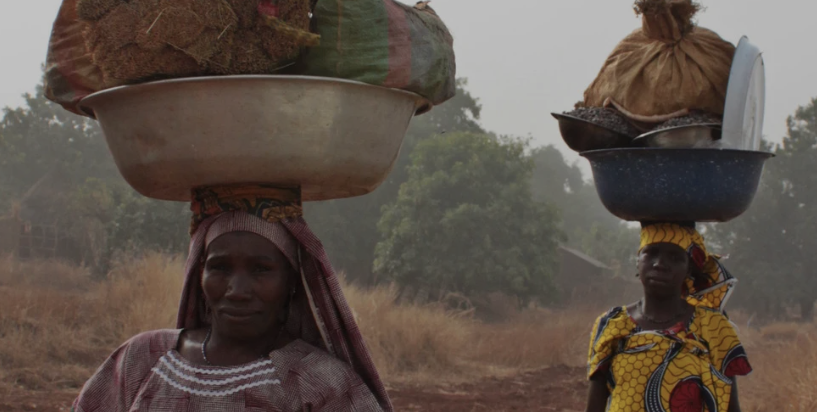
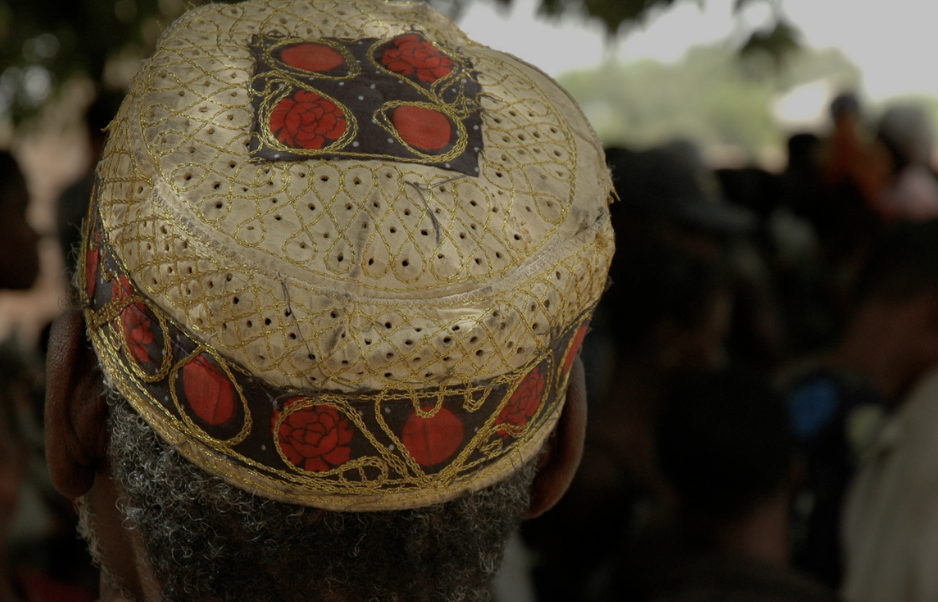
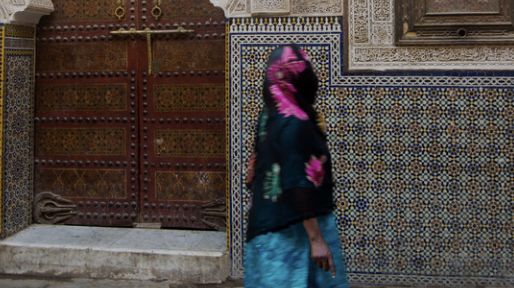
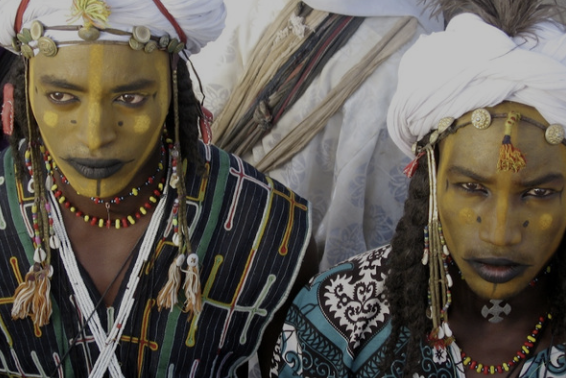
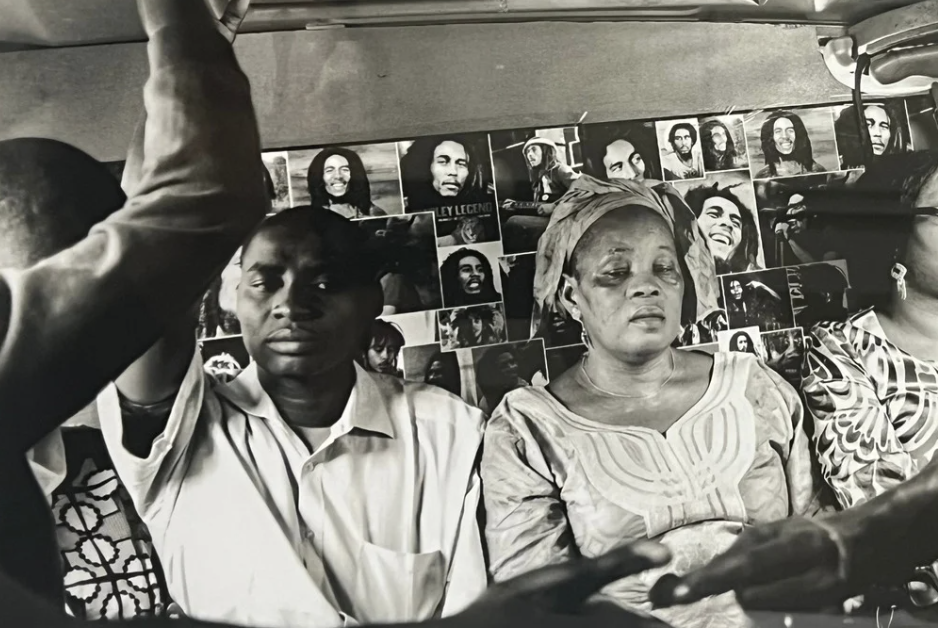
Photo Credit: Judith Kaine
ATTENTION: Deadlines for the Certificate in African Studies are as follows: August 1 for October Graduation, November 1 for February Graduation, and December 1 for May Graduation. Please note that applications are still being accepted for October graduation. Forms available http://registrar.columbia.edu/registrar-forms/application-degree-or-certificate

Attention SIPA Students: The course Political Economy of African Development (INAF U6163; call # 21504) will be offered for this spring, with Akbar Noman and Jennifer Cohen as instructors. The course will be offered on Tuesdays from 2:10-4pm in IAB 407.

Reconfiguration of Educational Inequalities in Rural Mali: Consequences on Students' Trajectories and Transitions to Work
A Presentation by Dr. Frederique Weyer

Date: January 31, 2012
Time: 12:15pm - 1:30pm
Location: Horace Mann 150, Teachers College
Organized by the Center for African Education, Teachers College

In this lecture, visiting scholar Dr. Weyer will discuss the rise in access to primary education in Mali since the 1990s. This massive expansion of access is associated with a diversification of educational provision, both formal and non-formal. Based on educational trajectories of young people in rural Mali, this presentation will argue that these two recent trends resulted in a reconfiguration of inequalities, with high drop-out and increased disparities in terms of skills acquired in school. It will also analyze the relationship between schooling and work, by relating students' trajectories and their contribution to production activities.

Book discussion with Simon Gikandi: Slavery and the Culture of Taste
Date: Tuesday, January 31, 2012
Time: 6:00pm - 8:00pm
Location: Heyman Center Common Room

Panelists include:
Simon Gikandi (Princeton University)
Carroll Smith-Rosenberg (University of Michigan)
Saidiya Hartman (Columbia University)
Madeleine Dobie (Columbia Univeristy)
Moderated by Mamadou Diouf (Columbia University)

Simon Gikandi's new book Slavery and the Culture of Taste (Princeton UP, 2011) demonstrates that these slavery and the culture of taste--the world of politeness, manners, and aesthetics were surprisingly entwined. Ranging across Britain, the antebellum South, and the West Indies, and examining vast archives, including portraits, period paintings, personal narratives, and diaries, Simon Gikandi illustrates how the violence and ugliness of enslavement actually shaped theories of taste, notions of beauty, and practices of high culture, and how slavery's impurity informed and haunted the rarified customs of the time.

This event is sponsored by the Institute of African Studies, The Institute for Research in African American Studies and the Institute for Comparative Literature and Society.

Film screening: Maryse Conde, Une Voix Singuliere
U.S. Premiere
Date: Thursday, February 2, 2012
Time: 6:30pm - 8:00pm
Location: Earl Hall Auditorium, Room 301
Presented by the Maison Francaise, Columbia University

Screening presented by scriptwriter Françoise Vergès, followed by Q&A with Maryse Condé (in English)
Film in French without English subtitles

This documentary, which premiered on French television in December 2011, retraces the life of celebrated author Maryse Condé. Born in Guadeloupe in 1937, she published over a dozen novels exploring the relationships between African peoples and the Diaspora and led a distinguished academic career in France and the U.S. Maryse Condé retired from Columbia as Professor Emerita of French in 2005. The film includes interviews conducted in Paris, New York, French Guiana and the Caribbean as well as archival footage.

University Seminar: After Antiretrovirals, During Cancer, Before Death in an African Oncology Ward
Talk by Julie Livingston

Date: Friday, February 3, 2012
Time: 4:00pm - 6:00pm
Location: Room 208, Knox Hall 208
Seminar Chairs: Gregory Mann and Hlonipha Mokoena

IAS Film and Q&A: Dead Mums Don't Cry
Date: Thursday, February 9, 2012
Time: 6:00pm - 8:00pm
Location: TBD

Becoming a mother in Africa can be among the most frightening and dangerous jobs in the world. This documentary documents the struggle of Grace Kodindo, an obstetrician in the poverty-stricken central African country of Chad, to stop mothers in her country from dying. Cutting maternal mortality by 75% by 2015 was one of the eight Millennium Development Goals set by 189 countries in 2000. Five years on, progress is far behind schedule, but "Dead Mums Don't Cry" shows there is reason for hope.

Dr. Kodindo, Assistant Professor of Emergency Obstetrics care at Columbia University Mailman School of Public Health and Medical / Advocacy Advisor to the Reproductive Health Access, Information and services in Emergency Settings (RAISE) Initiative, will be at the event to answer questions.

Elections in Africa: Senegal 2012
Date: February 13, 2012
Time: 4:00pm-6:00pm
Room: International Affairs Building 1501

Panelists:
Mamadou Diouf (Columbia University)
Souleymane Bachir Diagne (Columbia University)
Alioune Badara Diop (Universite Cheikh Anta Diop de Dakar)
Etienne Smith (Columbia University)
Chair: Alfred Stepan (Columbia University)

This panel discussion is part of the Institute of African Studies' 2011-2012 series focusing on elections in Africa. Panelists will discuss the historical context, current debates, and prospects for change in the upcoming Senegalese election. This event is sponsored by the Institute of African Studies, the Center for the Study of Democracy, Toleration, and Religion, and the School of International and Public Affairs.

IAS Film: African Underground: Democracy in Dakar
Date: February 13, 2012
Time: 6:30pm - 8:00pm
Location: International Affairs Building 1501

"African Underground: Democracy in Dakar" is a groundbreaking documentary film about hip-hop youth and politics in Dakar, Senegal during the controversial 2007 presidential election. The film follows emcees, graffiti writers, and DJ's who used their music and spray cans to educate and empower each other as a response to decades of single party political rule with little attention paid to urban poverty, unemployment, crime, and corruption. This documentary bridges the gap between hip-hop activism, video journalism and documentary film and explores the role of youth and musical activism on the political process.

Reinventing Citizenship and Political Leadership. The Role of Civil Society and Social Movements in Consolidating Democracy in Senegal
Lecture by Professor Alioune Badara Diop
Discussant: Professor Ousmane Kane

Date: February 14, 2012
Time: 4:00pm - 6:00pm
Room: Knox Hall 208

Alioune Badara Diop is a Professor of Political Science at Universite Cheikh Anta Diop de Dakar. His latest book is De la Gouvernementalité du Phénix: Elections, Logiques Sociales et Démocratie Représentative au Sénégal.

Ousmane Kane has served as associate professor of international and public affairs at SIPA at Columbia University since 2002. His most recent book is The Homeland is the Arena: Religion, Transnationalism and the Integration of Senegalese Immigrants in America.

This event is sponsored by the Institute of African Studies and the Center for the Study of Democracy, Toleration, and Religion.

View all Events

Al Jazeera Arabic NY Internship

Al Jazeera Arabic is seeking an intern in their New York/United Nations bureau. The intern will help produce live interviews, news packages and feature stories. Responsibilities include research, pitching stories, attending press conferences, and conducting interviews. Other duties include technical tasks such as logging tape, archiving footage, light editing on Final Cut Pro, coordinating transmissions, and limited administrative work. Arabic language proficiency preferred, and interest in the Middle East and international news required. The position is full-time for 3 months. Hours will vary depending on news of the day, but a normal day begins at 9am and ends at 5pm. Please send a resume and cover letter in the body of an email to Marcelle Hopkins at hopkinsm@aljazeera.net.

DUAL DEGREES AND JOINT PROGRAMS

Dual Certificate in African Studies (Universite Paris 1-Columbia University)

A year-long program to examine critical issues and perspectives about Africa and its relationship to its past as well as its place in today's global world. More info

The Homeland is the Arena
By Ousmane Oumar Kane, Associate professor of International and Public Affairs at SIPA.

Scholar Ousmane Kane offers an absorbing case study of the growing Senegalese community in New York City. By pulling together numerous aspects of the experience of the Senegalese migrant community into an integrated analysis, The Homeland is the Arena breaks new ground in the debate about postcolonial Senegal, Muslim globalization, and diaspora studies in the United States.
http://www.oup.com/us/catalog/general/subject/ReligionTheology/Islam/?view=usa&ci=9780199732319

Learn Zulu at Columbia University
Fall and Spring Semesters

Zulu is part of the Nguni subgroup of the Bantu languages, and one of the 11 official languages of South Africa. The African Studies Department at Columbia University allows you to take it at two levels- elementary and intermediary, so you can have enough time to speak it. Register now for the Fall 2011 semester and enjoy your next trip to South Africa even more!

Click here for the audio recording of February 18th Contemporary Migration to South Africa: A Regional Development Issue Discussion.

A special congratulations to Assistant Professor Séverine Autesserre of the Political Science department at Barnard College. Her book, The Trouble with the Congo, recently won the Chadwick Alger Prize for the best book published on International Organizations in 2010. The prize is awarded to authors whose work deals with how international organizations interact with nongovernmental organizations and other local civil society actors, as reflected in many of the writings of Chadwick F. Alger. Professor Autesserre expertly accomplishes this feat and more, by critically analyzing the peace building efforts in the Congo and calling for a closer concentration on local sources of conflict.

View all In the News


Papers and Presentations


Letter from the Director

Read the Letter from IAS Director, Mamadou Diouf.


Contact Us


Subscribe to ListServ

First Name:
Last Name:
Email Address:
Submit Reset


Find us on Facebook